Where the mind is free........

Tuesday, May 11, 2010

Dr. C. K. Prahalad commemorative professional network meeting


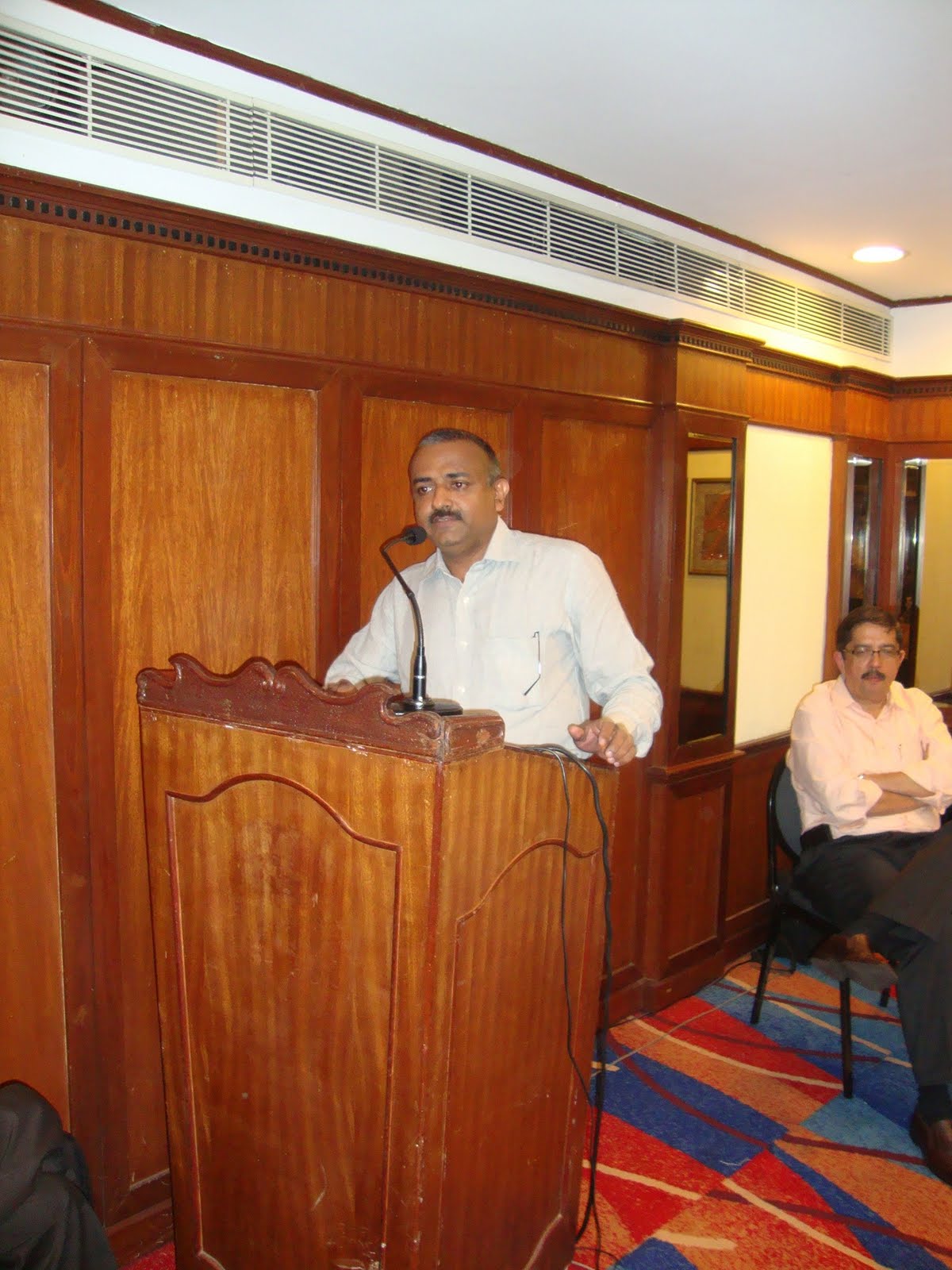
The text of the lecture I delivered at the C.K Prahalad commemorative professional network meeting at Gokulam Park, Kochi on 11/05/2010 organised by NIPM, Kochi Chapter, ISTD, Kochi Chapter, NHRD network, Cochin Chapter.


Dr. C. K. Prahalad commemorative Professional Network Meeting. 11/05/2010, Gokulam Park, Kochi.

Lecture by Shelly Jose, Rajagiri College of Social Sciences,
School of Management, Rajagiri Valley, Kakkanad, Kochi 682 039


(The other speakers were Mr. MSA Kumar of AVT Mc Cormick, Mr Ajith Kumar C S of Reliance and Mr. George Sleeba, Former CMD of FACT and presently Director of Albertian Institute of Management, Kochi.)


I shall start with one of Dr. C. K Prahalad’s famous quotes which I was fortunate to have listened to when he gave a lecture at the Ahmedabad Management Association way back in 2001. He said ‘ there is no reason why our public places should be untidy and unclean’. I am sure this does not stand out as a famous saying or something worth quoting. I shall try to explain why this was quintessentially characteristic of Dr. C. K Prahalad.

He was famously appreciative of the achievements that India had made of late. He used to often quote the example of the Communication Revolution of the late 80s and the nineties often sometimes refered to as the STD/ISD revolution.

The only resource that india had while embarking on that particular revolution was the political will and technocratic leadership. Our infrastructure was nothing to speak of then. There was also a culturally significant aspect to the revolution. Our nation is studied and classified as a highly collectivistic one. Therefore the objective of the communication revolution was simple. “ To provide telephone connectivity in every village”. Please do remember we are talking about an Indian village and not a Kerala village. Had it been a western individualistic endeavour, the objective would have been “ to provide telephone connectivity to every individual”. In a country of 100 crores of population this would have been impossible, even disastrous. That brings us back to Dr. C. K Prahalad. In this case the solution and the problem were wrapped up together. One of our problems at that time and even today to a great extent was the unemployment. By providing the STD booths, India was also generating employment opportunities to many. In effect the problem was looking for a solution when it was right there.

Another one of his famous examples was the dhabawallahs of Mumbai which most of us are today aware of and is very interesting from a management perspective. The dhabawallas have no resource except for a numbering system which they systematically follow in the chaos and din of a typical Mumbai day. The infrastructure that they depend on namely the suburban rail system in Mumbai is a common or shared infrastructure and not an exclusive one. The other infrastructure is the tiffin boxes which are actually owned by the housewives. The real resource is the simple numbering system that indicates the household, the street, the departing station, the arrival station and the final destination an office or any workplace. The system works with less than one percent inaccuracy. The whole thing is run on a peculiarly Indian custom of liking to eat fresh, hot homemade food.

Yet another of these examples which Dr. C K Prahalad was fond of but awaits development is the Indian Postal System. Reaching an individual household of a nation of 100 + crores is a nightmare. But one organisation does that every day for the last more than 100 years with 99% accuracy. That is the Indian Postal System. The potential value to be unlocked from this system surpasses the communication revolution or the dhabawalla example. If we can use the postal system or even merely the potential database that it can generate, that would surpass the world’s best mail order business.

Let us come back to Dr. C. K Prahalad again. Why are we quoting these examples. In all these cases the ambitions far outweigh the resources. To quote Dr. C. K Prahalad, “ambitions by definition are far more than the resources”. If the Mughal emperor hesitated like Hamlet about the resources there would never have been a Taj Mahal. If in the eighties we worried where the infrastructure would come from for the communication revolution there would not have been the telephone system we have today. Remember it was this infrastructure that served as the backbone of a subsequent revolution called information technology which we call today the ICT or the information and communication technology for which India is noticed by the entire world.

Many wonder whether there is anything quintessentially Indian about many of these, because many of the other success stories of yesterday were peculiarly different. The Romans had a great empire, but it was actually built by slaves. The British had an empire, but it was also the result of another equally unequal relationship of the colonizer and the subjects which all the civilised world frowns upon today. Americans had a vast and fresh continent full of resources and a relatively well developed human and technical resource from the old world to become a superpower in the twentieth century. India is the only country which has never invaded another for expansion in its entire history. What we know of and the western writers such as John Keay comment upon as the resilience of the Indians is this; that with minimal resource we can achieve remarkable feats given the right kind of will.

Let me come back to Dr. C. K Prahalad again. His argument or rather observation that ambitions are far more than the resources’ was theorized into what is called the ‘strategic intent’ in a paper he co-authored with Gary Hamel in the May- June 1989 issue of the Harvard Business Review. For perhaps the first time, the authors undermined the till then sacred notions of ‘strategic fit’ because ‘strategic intent’ flies in the face of strategic fit. An entrepreneur or a manager waiting for all the resources to fall into place would wait forever but one that sets the objectives far above the resource would achieve it. Dr.C.K. Prahalad quotes the examples of Komatsu, Honda and Canon in that paper. Komatsu in the 70s was less than 35% as large as Caterpillar in sales. By 1985 it was a 2.8 billion $ company. The story is elaborate but the intent was compressed into two words; “ Encircle caterpillar” .


Similarly Honda was smaller than any American Car company. But by 1987 it had started manufacturing as many cars worldwide as Chrysler. Another example he was fond of quoting was that of Canon and Xerox. Conon was a small company manufacturing lenses. Xerox was a company whose name was synonymous with photocopying. Canon by the late 80s had matched Xerox’s global market with a mean and short internal catch line, “ Beat Xerox”.

To quote C. K Prahalad again “ The lesson is clear; assessing the current tactical advantages of known competitors will not help you understand the resolution, stamina and inventiveness of potential competitors”. This ambition out of proportion to their resources and capabilities was at the centre of C.K Prahalad’s thinking. He was emphasizing that jumping a ditch of 8 feet would not be possible with two separate jumps of 4 feet each.

That makes us think what made C. K Prahalad different from the other management and strategy thinkers. Let us try to consider C. K Prahald with Michael Porter and Peter Drucker. Michael Porter is considered by many as the father of strategy thinking in business. His ideas chiefly were summarized under the five forces approach to competitive analysis or what now we understand as the structural analysis of industries. These five forces are rivalry among existing firms, the likelihood of Potential entrants, Bargaining Power of suppliers, Bargaining power of buyers and the threat of substitute products or services.

The framework of the core concepts of competitive strategy of Michael Porter include the cost leadership, Differentiation , Cost focus and differentiation focus. When we analyse both the five forces approach and the core concepts of Porter they derive from what we understand as the opportunity and threat side of the SWOT framework.

Let us now look at Peter Drucker’s strategy thinking. Among his many writings on Management thinking, the most strategically oriented is a paper titled “ The theory of the business” HBR, Sept- Oct, 1994. His main concern was that the right things are done but fruitlessly. The solution that Drucker advocated was to constantly examine the mission of the Corporation against the actual reality, the corporation’s assumptions about the environment and the core competencies of the corporation. Drucker emphasized that these three . ie the assumptions about the companies’ mission, environment and the core competencies must fit reality.

Let us come back to Dr. C. K Prahalad and his idea of strategic intent once again. If Canon or Komatsu or Honda tried to match the external realities as Drucker theorized they would never have beaten Xerox, Caterpillar or the American Car companies. Instead they reformulated the companies’ mission beyond their current capabilities and then developed the competencies for the same in leaps and bounds.
If Canon, Komatsu or Honda merely did a five forces analysis of their respective industries as Porter would advocate, the entry barriers were so great, they would never have beaten Xerox, Caterpillar or GM. The idea of strategic intent that ‘ambitions far outweigh’ the resources or even the reality, offers more than Michael Porter or Peter Drucker in superior and sustainable achievement as these examples suggest.

That brings us to the question of how was the idea of Prahalad different from that of the major stalwarts of strategic thinking.
Two of the other major theories of Prahalad might answer the question. The theories of both Porter and Drucker were heavily focused on the competition whether it is the five forces model or the assumptions about the environment. On the other hand Dr. C. K Prahalad focused on the inner strength of the firm and hence the idea of the core competence. While Porter and Drucker were focused on the external world, Dr. C. K Prahalad examined the inner strength of the firm and found from the examples of Canon, Komatsu and Honda that they created a mismatch or a misfit with the external environment. In this they had no idea except that they had to overcome certain forces. How to overcome was secondary. That they have to overcome the forces was primary.

How did these companies do it? They knew that the existing theories of strategic thinking merely repeated the game of ‘catching up’. So the prevalent ideas were that of benchmarking, TQM and reengineering at the operational level. But these techniques have a problem. They are merely techniques that can easily be imitated or even bettered. It is only a question of time, a question of ‘when’ rather than ‘whether’. So eventually after one firm catches up and may be overcomes, the other firm also catches up with the first one and surpasses. This will only lead to a game of endless catching up.


Dr. C. K Prahalad and Gary Hamel’s answer was to look within and develop what was termed the ‘core competence’ in a paper from HBR May- June 1990. Core competence was a going back on decentralization or rather a reflection on the family values of a decentralized entity. Consider Canon. The product line is many from cameras to medical imaging to photocopiers. But at the core of all these products is the lens, the manufacturing of which Canon will never outsource. Consider HONDA , the petrol engine which is at the core of all HONDA products they will never outsource. In fact, the founder of HONDA Soichiro HONDA was an automobile enthusiast and a racer who tinkered with the petrol engine and fine tune it everytime he lost a race. It is the founder’s enthusiasm that is captured in the Honda engine that further is the hallmark of all Honda products.


The game of ‘catching up’ that the other strategic thinkers inadvertently advocated ended when the firm hit the core competence of the rival. They found that the core competence was valuable, rare imperfectly imitable and non replicable (VRIN). Today the idea of core competence and strategic intent has developed into a new branch of strategy called Resource based view (RBV). RBV concentrates on enhancing the strengths and mitigating weaknesses more than on opportunities and threats and in the process strengthens themselves so that others find it difficult to emulate. The competitor to Honda can replicate many things but he can never replicate the enthusiasm of the entrepreneur Honda. A company can hire the employees of another company, but they will never be able to hire its organizational climate or culture. These aspects namely the history, culture and the legacy are the things that eminently qualify for the adjectives VRIN.

HR professionals may have noted that all these variables such as culture and legacy are in fact outcomes of HR whether we use the term HR in the sense of resource or in the sense of practices.HR practices are what leads to the unique culture and unique culture is what is the unique competence of the firm.

Coming back again to Dr. C. K Prahalad in promulgating the idea of core competence, he was pinpointing the central precept of strategy. In emphasizing the strategic intent he was advocating and exhorting an attitude that was the essence of entrepreneurship. The history of the latest revolutions such as the computer revolution is replete with examples of an ecosystem of firms that co create and reinforce each other. The idea of co-opetition was one of those ideas by James F. Moore of the famous moore’s Law that he came out with in a paper titled ‘Predators and Prey’: A new ecology of competition’ in HBR May – June 1991. Dr. C. K Prahalad extended it to the problems of India. He creatively extended the idea to co- creation and applied it o the problems of India and brought together business interests and poverty alleviation which was formerly thought to be incompatible. The result was the idea of ‘Fortune at the bottom of the pyramid: Eradicating poverty through profits’. In a way the solutions to the problems lay in the problems themselves and this was the insight that Dr. C. K. Prahalad unearthed for the benefit of both business and society. The results of this idea is now found in products as wide ranging as from shampoo sachets to the Nano car.
I would conclude that Dr. C. K Prahalad is the example of the quintessential Indian synthetic or synthesizing thinking in which everything even diverse things and ideas had a place in the universe as against the analytic and prescriptive thinking of the western mind. In putting forth these ideas whether strategic intent, core competence or bottom of the pyramid he was actually putting forth the integrative, resilient and compassionate Indian mind into the business world.
----------------------.

Tuesday, April 13, 2010

Heedful interrelation


I had a flash of insight one day when I was at the exam hall invigilating. The idea is pretty simple and is requisite in all human interactions but the theorising requires some technicalities. And in reality all hierarchies are a requirement arising out of information imperfection which is as such in reality in this world at least.

Unfortunately information imperfection is misconstrued as opportunities to grab power and hold on. Here is the article which will soon be published....


Heedful interrelation as the key to system efficiency and hierarchy as a compensation for information imperfection:- Illustration from administrative situations

by SHELLY JOSE

ABSTRACT

Literature is replete with team building necessary for the efficiency of the system within the dominant paradigm of individualism and competition. A new strain of positive organizational behaviour literature hints more at interrelatedness rather than competition suggested by individualism. The present attempt is to posit greater system efficiency that can be generated within a networked behavioural environment drawing illustration of a simple system such as exam administration and further extrapolation to more complex systems such as a traffic junction administration. Further extrapolation may be possible in more complex systems however, with necessary information dissemination and minimal hierarchy enough to offset the transition from the simple to the complex. Moreover it might even be possible to posit that hierarchy itself is a necessity born out of inadequate information dissemination and heterogeneity of activities.

Shelly Jose teaches at Rajagiri School of Management, Kochi and has both management teaching and industrial experience. His current interests include Oragnisational Behaviour and Strategic Management.


Introduction.

Any system would have system efficiency as its objective. Can behavior of actors in a system be contributive of system efficiency or inefficiency? If so, what would constitute appropriate behavior? That would require an examination of the system. It would also require that the dominant paradigm be modified and represented appropriately that the individual actors know their role towards greater system efficiency. Positive organizational behavior offers some insights to develop such a system efficiency based on actors’ behavior. An example is drawn from a simple system such as exam administration to illustrate the concept of positive organisational behavior with emphasis on directiveness.

The concept of Heedful interrelating, mindful organizing and respectful interaction

The concept of heedful interrelating forms a trio with respectful interaction and mindful organizing in appreciative inquiry strain of organizational behavior. It can be summed up in the words of Weick as generally mapped out sequences, of highly trained people capable of improvisation and adaptation. The key here is joint capability to function as a single mind. Further, a major property of heedful interrelating is that the people see their work as a contribution to a system, not as a standalone activity. People act as if they are under the direction of a single organizing centre even though no such centre exists.


When people act as if there is something towards which they contribute, ‘that something’ starts to materialize, a key component of a self organizing system.

Another property is the representation which is a shared visualization of the meshed contributions. Each participant has a representation that includes the action/s of others and their relations. And finally, people treat their system as their referent and act in ways that meet the needs of the system.

The concept of mindful organizing in positive organizing would mean an organising that enriches experience and pragmatically improves perception, alertness and adaptation through efforts to refine and differentiate existing categories, create new categories and detect subtle ways in which contexts vary and call for contingent responding. And respectful interaction would entail trusting, being trustworthy and maintaining self respect.

Sense making resources.

Interaction and conversation (social), clear frames of reference (identity), relevant past experience (retrospect), neglected details in the current environment (cues), updating the impressions that have changed (ongoing), plausible stories of what could be happening (plausibility), and actions that clarify thinking (enactment) together form the sense making resources.

The simple system of exam administration and the constraints
The exam administration in the traditional system has two broad functions; one of supervising the students and the other of providing the requisite stationery for the students. The provision of stationery i.e. answer booklets for writing is in the normal course simplistic however, with stipulations on restricting the supply only upon requests, poses a constraint, needing invigilators to be alert to the requests and to be acting in ways as to minimize loss of time. Time therefore is also a constraint built into the system.

The number of administrators is also restricted due to the constraint on enough people to spare. The job is essentially of a non productive nature or productive only in a deterrent sense. Because of the requirement of silence in the exam hall, information of a request is generated, understood and passed on through gestures at best.

Fig 1- Exam hall


The paradigm of competition would in this case mean more number of stationery distributed by a single administrator. However, more importantly, system efficiency would mean less movement of administrators or less time from request to supply.

The actors in the system are the invigilators and the students undergoing the exam. Interaction could be between the invigilators or between invigilators and students, but not between students.

Heedfulness, mindfulness and respectfulness in the exam administration system.


Now let us apply the heedfulness, mindfulness and respectfulness discussed in the first part to the exam administration system. For illustrative purposes, a typical examination hall would be a hall with students in 9 columns with 20 rows. An approximate number of examinees would be 120 to 180. The number of exam administrators is 3. (See fig 1)

Heedfulness of the administrator would mean alertness to the requests and an approximate gauging of distance of the administrator(s) from the request spot and delivery either himself or alerting other administrator/s. A competition or game theory paradigm would require an administrator to be eager to deliver the stationery himself whereas the system efficiency paradigm would require one to gauge that another administrator may be near the request and alert him in turn to deliver. It is the system efficiency paradigm that is sought to be examined and mapped here in this article.

Efficiency can be added if there can be a mental map (representation) of the exam hall being divided into as many sectors as there are number of administrators. Further it is expected that the administrators keep moving both for the purpose of watchfulness and for the simple fact that mere standing in one place is ergonomically undesirable. The requests for stationery can then easily be responded to, depending on the position of the nearest administrator.

Further the mental map can be used in such a way that the administrator moves as if the area is divided roughly into the number of administrators and adjust self movement to fill the vacant area created by a moving administrator so that at any moment no request is too far away from the particular student examinee.

Therefore the appropriate self movement would then be such that the longest distance would be the longest distance within the divided area. At some moment a rest pause is a possibility for one of the administrators in which case the total area is mentally mapped by the rest of the administrators to be divided into A/ ( n-r) where A is the total area, n is the number of administrators, r is the number of administrators taking rest pause.

Efficiency would then mean least distance of the administrator and the avoidance of wasteful movement of a particular administrator as to move any distance more than the longest distance within the A/n area or A/ ( n-r) as the case may be. The heedfulness, mindfulness and respectfulness in this case would mean that the system efficiency paradigm would require a distant administrator to gauge that another administrator may be near the request and alert him in turn to deliver.

Adding heedfulness of requestors

Since the administrators are on the move it would be possible to have further system efficiency if we add heedfulness of the requestors as well. An individual student requestor can very well anticipate his /her stationery need and request as the administrator approaches, eliminating the need for a distant request. This would further reduce the request – approach – delivery time delay.

The new improved sequence that gets enacted would then be

Approach-------------- Request ----------- Delivery
replacing the former
Request --------------- Approach ---------- Delivery

with least time lag in the sequence.

The system in a small area would need more of a networked interaction between the administrators with non verbal interactions than a hierarchical one unlike as with a music conductor and the musicians.

A hierarchy would be needed only if all administrators can’t perceive each other and their relative positions. The hierarchy is then less useful. The networked interaction (in contrast to the hierarchical one) would nevertheless leave room for directiveness when a particular administrator may be alerted by another one as to a request near to the one alerted in an event he has not noticed the request.

In a way, the absence of hierarchy and the emergence of the need for alerting would generate directiveness alternatively from each of the administrators (mindful organizing) and we could say for the moment the apex of the hierarchy shifts to that particular alerting administrator after which the network goes back to its original non- hierarchical state.

Higher levels of complexity and heedfulness.
We can now move on to heedfulness on situations involving multiple actors and greater complexity as in a traffic system.

Fig 2 - Traffic junction

Since at any given moment, the individual driver’s information about the terrain is only limited to his visual field, a hierarchy becomes necessary at the traffic junction manned by police personnel with authority. If information was perfectly available to all the drivers and they were all capable of heedfully interacting, the need for hierarchy (directiveness from the police personnel) is reduced so much. Even with such a hierarchy, the actors’ heedfulness would reduce the load on the police, provided all the actors transmit their intentions (using proper signals) unambiguously and cooperate accordingly.

We can add levels of complexity further such as a railway signaling system and an air traffic control system etc. and in all such situations it is found that behavioural adjustments in terms of heedful interrelating, mindful organizing and respectful interactions between the actors facilitated by the hierarchy forms the basis of system efficiency. However, the key point is that hierarchy in this sense is a necessary addition only to compensate for the information non- availability to the actors arising out of the progressive complexity in each of these situations.


Fig 3 Railway signaling system


Fig 4 Air traffic Control system


Fig 5 The economy as a system

Can we therefore postulate that systems such as the economy at large would also benefit from the heedfulness, mindfulness and respectfulness of the citizens and mediation and directiveness from authorities such as the government only to compensate for the information non availability due to the complexity once again?

And given the qualitative behavioral changes, the role of the government or any authority would diminish as to intervene only by exception further raising the efficiency of the system as a whole. This would eliminate disruptive tendencies such as power for the sake of power and in a networked environment, power or in simplistic terms, the presence of directiveness shifts in such a way that the alerting becomes of more significance than mere power holding and actors would not hesitate to be alternately alerted and directed and also alerting and directing depending on the circumstances, adding to system efficiency overall.

Conclusion

The discussions on organizational behavior till recently considered behavior from a deficiency perspective requiring corrections or gap filling. This necessarily followed form a therapeutic approach as with many other discussions relating to post war psychology. Discussions on what works were overshadowed by what did not work and what interventions were required. The new strain of positive organisational behavior takes an opposite view and is expected to give less resistance compared to the deficiency – gap filling perspective of traditional organizational behaviour.

The foregoing discussion tried to bring in examples from simple administrative situations and extrapolated to more complex systems. Much of the necessity of hierarchy is redundant in the emerging networked world which fact is however less evident due to the predominant non- examination of the dominant prevailing wisdom of authority and directiveness. The discussion posited authority and directiveness as a necessary feature only of systems that have inadequate information dissemination and presence of complexity. Given the networked system, it may be necessary to redraw the lines so as to allow for the emergence of centres of authority and directiveness alternately diffused in the nodes of the network determined by the need for alerting other nodes. Heedful interrelation among the actors is paramount in such a model and the same is less appreciative of competitive interactions than cooperative interactions and one could say that as such, the model is focused on system efficiency and redefines competitiveness as the ability to heedfully interact.

----------------------------------------

Tuesday, March 30, 2010

CSR through sensible market intervention

The article on CSR as Consumer Social Responsibility (ET, 30th March 2010), by Nitish Kumar of XIMB did not make any sense to me. So I wrote a response to ET as below; Hope they will publish it or else.....


CSR through sensible market intervention rather than consumers

This is a response to Nitish Kumar’s article in the POLICY page on CSR as consumer social responsibility. (ET, Tuesday 30th March, 2010.)
The debate on whether it is possible for a bottom up approach from consumer awareness and choices to social responsibility postulates that the consumer’s informed freedom of choice would lead to CSR. Nothing could be farther from the truth. First of all the price sensitivity of the Indian consumer has not been considered, although it is implied in the consumer’s preferences for cheap Chinese products.

The consumer in a developed economy is different from that of a developing one. Besides, the ‘consumer’ is an amorphous term. There is not a single entity called the Indian consumer to be called as such. In a more developed economy such as that of the US, because of the presence of consumer activists such as Ralph Nader there can be concerted efforts from the consumers side , but the Indian consumer is still unorganized.
Therefore educating consumer would call for the question, which consumer? If the answer is ‘everyone’ is it possible to educate everyone where the author himself has suggested that the government has failed?
On the other hand, business houses are more concrete and numerable. However the article implies that it is unlikely that the business houses would take responsibility for pollution or CSR. That is why an alternate idea of consumer as CSR in the first place.


That the consumer would be able to determine the CSR or pollution control by his freedom of choice is counter to experience since the matter is age old and is the first text book reference to negative externalities such as pollution as examples of how the market mechanism itself fails in certain cases.


Coming back to the Indian consumer he is still not willing to pay more or demand for environmental performance or CSR in his choice of products or purchase decisions, leave alone thinking about ultimate prices they pay. The Indian consumer is worried more about how affordable something is.


Given the above, that is, consumer not ready and the corporate not expected, then the only way to mitigate the negative is by diktats and law enforcement. However, that can also be not expected as the article says the government has failed in its functions.


However, there are ways in which the government can induce the consumer to prefer and the corporate to invest in less polluting technologies. One such method is by removing subsidies, for instance, on oil, if not all on a sudden but in a phased manner. When oil prices are left to be market determined, their prices are sure to find market equilibrium at a higher level than the present one.

This would trigger efforts at alternate energy. The relative cost of the alternate energy comes down and eventually becomes less than the oil prices as volumes reduce unit costs. There will be a time when using polluting oil would be costlier than using non polluting alternatives. The only factor that makes oil attractive presently is the subsidies on oil at the cost of the taxpayer.

For the CSR or Environmental responsibility an economy hopes to achieve by consumer freedom of choice, the consumer should first be given a choice. The government should divert the subsidies on unclean technology such as on oil and its derivatives to the cleaner alternatives. By doing so, the consumers , the producers and the society at large benefits.
Merely hoping consumers would take up CSR and business would educate consumers would remain exactly what it is ; Hope!


Author details : Shelly Jose, Teaches Environmental Management and Business Ethics at Rajagiri Centre for Business Studies, Kochi.

Thursday, March 18, 2010

A paper on popularisation of Management


In 2002 while I was doing the FDP at IIM Ahmedabad, professor M.R. Dixit had given an assignment on the 'Future of Management'. The predominant schema in my mind at that time revolved around the ideas of Management, bottom of the pyramid, culture and the peculiarity of Kerala economically, socially, environmentally and demographically.

The same was reflected in the paper. Here is the paper in an article form..


Emerging organisations and popularization of Management as a discipline; the case for a Kerala model of tourism

Shelly Jose

Abstract


The following paper postulates that the forces of egalitarianism are inevitable due to the forces of technology and globalization, which will necessitate a revamp of the hierarchical business model of today. This will have behavioral and societal consequences. A grounded, community-based business model based on the peculiarities of Kerala as a geographic and social entity distinct from other regions of India is a logical extension of the same argument.


Introduction


The two dominant paradigms that distinguish our age is the explosion and ubiquity of information made possible by the leaps in information technology and the movement towards globalization. With this in mind, the following future scenario of management as a dynamic component that changes to adapt to the times (in no small measure created by Management itself with its bias towards action and development) is discussed. A context for such application and integration of ‘Management’ at an egalitarian, grass root level is illustrated in the background of Kerala’s potential as a tourism destination.


Changes in organisations due to greater need for focus

As more and more differentiation takes place due to need for focus, there will be more and more specialized organizations. Due to the forces unleashed by liberalization, Indian organizations also are likely to move towards further specialization. For instance there is likelihood of more and more organizations emerging purely for research and development. More and more R&D will be outsourced even in the social sciences. Already some like Marketing Research do exist. In the social sciences, there is likely more and more institutions doing theoretical research, much like the physical and natural sciences. The action research will take stimuli from theoretical research and work on. So the differentiation will be for example, in terms of traditional organizations, action research organizations and theoretical research organizations.

In essence, this reflects a tendency towards subcontracting of major operations as well. However, since reliability is a major issue even subcontract organizations will need to establish credentials in terms of high levels of integrity and efficiency. This requires highly specialized management practitioners and practices in the research field. The maintenance and certification of standards will be a major offshoot of this development which will be another knowledge based managerial domain. More importantly the importance of such developments indicates the movement of ‘Management’ as a discipline to more grassroots and specialist levels.

The key managerial adaptation for the subcontract organizations will be of knowledge / idea acquisition, classification, and transmission all for more and more specific kinds of industries and purposes and the building up of necessary credibility.


Changes in organisations to IT revolution

Due to the maturity of information technology and its wide dissemination, as more and more functions become amenable to be outsourced from people working from their homes, amenability being the digitization, transmission and security of documents, all through advances in the software technology, the future role of some managers will be that of managing and co-ordinating these SOHO (Small office home office) operators perhaps from their own SOHOs. Once again, SOHOs will have to establish their credentials in terms of integrity and efficiency. In this we will be creating a new breed of contract SOHOs, the commitment of whom will be of the order of buying into the values and practices espoused by the companies just as the customers are loyal to the quality of products that these companies offer. As the SOHO employee will enjoy much more autonomy and is much less in degree a member of the organization, retaining him will require a different order of talent. It is likely that organisations will not be vying for talented employees but credible autonomous SOHO employees.


As the SOHO employee is free to take on assignments from multiple sources there is a likelihood of pervasive permissiveness. The anguishes of the market economy such as lay off and retrenchment will be of a lesser nature as the SOHO employee is less likely fully out of job. This is a pleasant scenario, in a way prompting many to become SOHO entrepreneur employees. As companies come and go, disintegrate and reconfigure endlessly, the SOHO will remain as the centre around which activities arrange themselves. Society will arrange itself in a new kind of egalitarianism. A fluid ambience convenient to all the players will be the likely order. In fact this will be a new kind of situation where the freedom provided by the fluidity, the freedom to come in and go the freedom to make a mark and move on will outweigh the security provided by lifelong employment.

Managerial talent of big organisations surrounded by SOHOs would be of a kind much in the same way of developing and maintaining relationship with a back up list of vendors, suppliers and contractors.


Changes in Power distance

As more and more of these needs are taken care of by smaller and smaller organizations, the society’s notions of status as in the traditional hierarchical organizations will also acquire new meanings. When everybody interacts in an increasingly less face to face manner, society will once again shed its power distance to take an egalitarian shape.

Those individuals who are unable to comprehend the change of power distance that they ostensibly kept to keep themselves in the upper dog’s position will feel alienated. This would be a new order of alienation, an alienation of the upper dog. As a high power distance society grapple with the alienation of the upper dog more social innovations may be required to counter these.

As access to information becomes more and more pervasive in the form of more number of TVs and other mass and individualized communications, the traditional divisions are likely to wither away. As at a younger age a child born for instance in lesser circumstances watches more and more egalitarian interactions (not to forget the others conscious efforts by society at removing differences) they are likely to discard many of the attempts at the reinforcements of inequality. Same is true for the child in better circumstances whose acculturation takes place in large measure with the public media, as he will be able to see the less fortunate one child in more egalitarian terms. In a way what social change was warranted to be achieved by other means would be achieved by the almost automatic and ubiquitous information provided by the information age driven paradoxically by the profit motivated market forces.

Another reason for the emerging egalitarianism is that unlike in previous eras the increase in wealth of the well to do is accompanied by an increase in the wealth of the lower strata as well.


The Implications for organizations is that the inculcation of the egalitarian awareness will force the next generation to be more and more networked / flat and less hierarchical.


An Indian Management Service than an Indian Administrative Service

As Dr. C.K. Prahalad says, all the Indian successes have a similar pattern. They all relied on state of the art technologies, used different non- western business models and the leaders knew the businesses (read they were not bureaucrats). Examples are operation flood, green revolution and the DOT. In all these cases the solution to the problem of poverty itself was the new opportunity. What it means is the taking over of the Indian Management by the non- bureaucratic business managers. An Indian Management Service (IMS) on the lines of the IAS could supplement the IAS where specialist –generalists ( jack of all trades and master of one) could be produced on the lines of a rapid action force (but with a bias for consistent, intensive action) from among the existing and also non-traditional managerial pool. Any lack of knowledge of the business will be punished by the market economy in its natural function.


An alternative business model in the tourism sector for Kerala.

More sectors would try to duplicate the successes of the type of DOT and operation flood. One possible example is postulated below. What is likely to emerge is a Community tourism model for the state of Kerala in lines with the Anand experience. In a socially progressive, but economically backward state like Kerala, the special combination of stabilization of population at replacement level, education, almost total investment in built up domestic dwelling, information backbone and tapping possibility due to its north south orientation, above average transportation facilities and communication facilities and high literacy would help open up newer models of tourism. The high population density and the string of small town pattern, which renders distances smaller than in other states do also make the model a viable one.


The ‘National Geographic traveler’ has listed Kerala in 1999 as one of the must see destinations of a lifetime. The interesting feature is that the only other place in India featuring in the list was Taj Mahal which is only a monument compared to the whole of Kerala so many square kms of it.

By extending the logic, by simply building quality roads, Kerala can be initiated into village and ecological tourism by the community approach at considerable cheaper rates to the tourist. All that is needed further is a home stay model accommodation in existing farm houses and other houses in scenic ambience. This would bring about a grass root level revolution with grass root beneficiaries in much the same way as Anand. The fact that the potential is enhanced by the traditional cash crops like rubber plantations and the natural beauty of the state provides a natural advantage to Kerala. This brings us to a new need in the academia namely ‘Tourism management’ for households.


Tourism Management for households

The managerial talent in this instance needs to be extended to every household, which would be a great experiment in popularization of management skills perhaps for the first time in the history of the world. Among the many other firsts to Kerala this could be an additional one. The present advances in social indicators can thus be very conveniently tapped in the tourism business at a very low investment.

This would mean that guides chosen from the villages shall have to be trained in language, local customs, flora and fauna to be explained to the tourist. The other facilities of near ubiquitous transportation access to telephone are already at a higher density and quality than the rest of the states. This combination makes Kerala a unique place for such an experimentation. The model also will be easy on the need for more hotel accommodation. The western tourists are out on an escape trip from the luxuries they are so used to. There is very little justification for providing opulent luxury in five star hotels here. Rather the village/ecological/exotic household culture ambience is the product that needs to be packaged. In a flash, there is no difficulty in seeing that the solution to the problem (of unemployment, low returns from land) is itself the business opportunity.

It is relevant to mention that the subject calls for both the inputs from the domain of tourism as also from that of management especially human resource, logistics, operations, public relations and household management. A great deal of emphasis can be given to the behavioural and personality development and cross cultural sensitivity.

A first line of action could be the training of willing youth from the countryside to be host-guides to foreigners. This could also double up as a valuable addition to the Human Resource Development of the nation besides generating valuable foreign exchange.

The objective is to further strengthen the position of Kerala as a world class destination. A look at the world map indicating the prevalence of homestay concept shows that the concept is though well entrenched in the rest of the world, the most frequent reference are to Thailand and Cuba. However adequate precautions need to be taken for avoiding the pitfalls of their experiences.

As can be observed, the model is made all the more possible by the advances in information technology, the increasing globalization and the social and economic peculiarities of Kerala. Similar indigenous business models can be explored in other states suiting the local conditions. In all cases what is predicted is more egalitarianism and grass root level popularization of ‘Management’ at the rural household level as a new model of home ‘office’ for national product generation itself. This serves some of the qualifying characteristics of 21st century business such as world citizens serving both local communities and global society, commitment to continuous learning and models of environmental sustainability.


References

Gladwell, Malcolm, (2002) The tipping point How little things can make a big difference, Black Bay books.

Jaiswal A. K, Fortune at the bottom of the pyramid, An alternative perspective. WP No 2007-7-13 doc id. http://www.iimahd.ernet.in/publications/data/2007-07-13Jaiswal.pdf

Maynard, Herman Bryant and Mehrtens, Susan E , Fourth Wave: Business in the 21st Century Berret Koehler Publishers Inc. CA

Website : http://www.homestayweb.com/.

------------------


Monday, January 11, 2010

Spiritual Approach to love and trials


It is amazing how resilient the human spirit is and the way the spiritual route can comfort one in times of trial. In the turmoil that I faced in late 2006, I chanced upon this piece titled 'the spiritual approach to love and trials' true and must for anyone who ever wondered the problem of waxing and waning feelings inmatrimony.....

Spiritual approach to love and trials


The Bible measures love, not in tingles per second, but in putting one’s life on the line. (1 John 3:16-18).

It’s pain endured in the valley, not gooey feelings in the afterglow of mountaintop ecstasy, that validates love.

By all means, passionately seek the face of God, but don’t assume that emotional deadness – a normal phase of anyone’s spiritual life – implies spiritual deadness. We march by faith, not by warm fuzzies.

Life seems hopeless. Every day it feels you’ve slumped another notch. To maintain even a glimmer of faith in such darkness is a spectacular victory. It may take everything you’ve got just to hold on. But do it. You are pumping spiritual iron.

If your blossom is dying, it’s so that the fruit can grow. Remember the cripple at the temple gate: he hoped for alms and got legs.(Acts3:1-3) Creator God loves surprises. And he loves you.

Like vine branches, we are not continually laden with fruit. That would be unnatural. (Ecclesiastes 3:1) For a significant portion of its life, a grapevine is nothing but a dry, twisted stick; fruitless, useless for shade, worthless as timber; to all appearances fit only to be ripped from the ground and reduced to ashes. Yet those barren times are as vital in the life of the vine, as the seasons of fruit.

Though you feel as useless as a fur coat in a heat-wave, the time will come when your warmth is treasured. For everything there is a season.

For vast numbers of Christians, the spiritual impact of their lives seems directly proportional to their past agony. Situations they would have most wanted to avoid – times when death seemed preferable – empowered their lives like no other experience.

When I’m low, however, the last thing I need is despondency about my despondency. Though we slide on a downer, that does not make us losers. A horde of spiritual giants have been on the slide before us and lived to excel.

What distinguishes people of faith is not how rarely they hit the dirt, but how often they get up again. To be perpetually positive is impossible.
Faith is leaving the security of inactivity and deliberately exposing ourselves to the painful possibility of defeat.

When we let God down – even if we really foul things up – picture the proudest father the world has seen. The baby screams, dribbles and soils itself, yet Dad still glows with pride. God is like that.

No matter how you feel, you are the focus of God’s attention; doted on as though you are the only friend God has. If ever a man wanted to shower his bride with love, or his son with gifts, God longs to lavish you with his extravagance. Expect great things from God. Anything less is an insult to your almighty Saviour. With your Lord impossibilities are playthings.

And believe that though he may lovingly delay your mission, his timing is perfect. Everything God touches is destined for glory. Even now, you are God’s ‘filthy rags to heavenly riches’ success story.

Forgetting that it is faith, not tears, that most moves our Lord, we secretly hope that if we are sufficiently miserable, he will have pity on us. That’s like trying to scale a mountain by digging a hole. Praise achieves things self-pity or self-recrimination could never do.

Praise magnifies God. The alternative magnifies the problem. The last thing we need is a ‘small’ God and large problems! What will we choose to exalt: the mighty, eternal God, or the puny, temporary problem? Praise pricks bloated problems by empowering us to glimpse the enormity of God.

Friday, December 4, 2009

About the dominant powers

The question of our times is bound with the question of the dominant power of the times just as the Roman times or the (British) colonial days. Post war generation was brought up in a cold war dominated by the American and the Russian hegemonies now larely confined to a unipolar one with just one dominant superpower. Is it likely to be going on? Or like all civilisations will this also come to an end? Here is an article by Morris Berman.

The Twilight of American Culture


COLLAPSE, OR TRANSFORMATION?

Sallust's description of Rome in 80 B.C.—a government controlled by wealth, a ruling-class numb to the repetitions of political scandal, a public diverted by chariot races and gladiatorial shows—stands as a fair summary of some of our own circumstances....
—Lewis Lapham,Waiting for the Barbarians

Before we can talk about the long road to cultural healing, then, we must begin by understanding the illness. But here we are confronted with a complicating factor, briefly alluded to in the Introduction: Decline comes inevitably to all civilizations. With the exception of hunter-gatherer societies that have not been interfered with by more complex ones (and there are no pristine hunter-gatherers left anymore, I fear), the pattern of birth, maturity, and decay would seem to be inescapable. Est ubi gloria nunc Babyloniae? Where is the glory of Babylonia now? Or that of ancient Egypt, China, India, Greece, Rome? Gone, all gone—that is the historical record. Why, then, should America escape this fate? If decay is built into the civilizational process itself, then talk of healing might be a bit out of place. Indeed, from an analytical standpoint, the problem is not that states collapse—for that is the rule—but that some manage to last as long as they do. To what purpose, then, my attempt to give the reader a cultural roadmap, or to suggest a way out, a creative response? If the historical record is clear on this point, there is no way out. We might just as well fiddle while New York and Los Angeles burn.
This is, of course, a formidable objection, one not easily dismissed. Nor do I believe that America is somehow so privileged as to constitute a historical exception (which belief would be a typically American kind of hubris). But three things do jump out of the historical record that are worth mentioning. First, the process of decay may be inevitable, but it is rarely linear. In its three thousand years, for example, Egypt suffered periods of complete political disintegration and foreign domination that sometimes lasted more than a century, and it then bounced back. While its ultimate decline was inevitable, and it was eventually absorbed into the Greco-Roman Empire, three millennia is not exactly an unimpressive showing; and most of those years were "up" (in terms of political coherence), while some of them were "down." So it might conceivably be argued that the United States is going through a bad patch, from which it might recover, at least for a time.
Second, if the classical model of collapse of empire is that of ancient Rome, we have to remember that its fall was, in terms of the larger world system, as much a transformation as it was a decline. Indeed, it was from the ruins of the Roman Empire that medieval European civilization emerged. While the parallels between the Roman case and the American one are not exact, the analogy does suggest some transformative possibilities. If, for example, we are indeed slated for another dark age, it may not have to last six hundred years this time around. This is precisely a case in which something like the monastic option, and the deliberate work of cultural preservation, might come into play.

Third, there is the issue already mentioned in the Introduction, and which I shall discuss later on in this chapter, as well: This is a very lively kind of decline. In this sense, possible hubris notwithstanding, something unprecedented might be happening. Europe's Dark Ages were truly dark—"singularly monochromatic," as the historian Peter Brown put it. Our own transformation is confusing, because of the "invisibility" factor discussed above. For those seduced by noise, toys, and technology, the current transformation to a global economy is nothing less than cultural efflorescence. For those who place their values elsewhere, there is the paradox that the very success of McWorld, the very transformation that it represents, is a darkness that is ultimately every bit as dark as the early Middle Ages, no matter what the surface appearances might indicate. Whether this will make recovery easier or more difficult remains to be seen.

My point, in other words, is that even if decline is historically inevitable, it is still a process that contains unexpected twists and turns. The sine curve may be descending, but there are loopholes in it nonetheless. Furthermore, the precedent of the monastic option suggests that there might be ways of ensuring that what is of value in this civilization can be preserved and handed down in the hope of generating cultural renewal at some later point. As for the individual reader poring over these pages, he or she doesn't have to be a statistic; there are choices to be made that move in directions opposite to the general tide of events. Before we discuss all that, however, we need to have a closer look at the larger process of civilizational decline, and the factors that come into play when a culture enters its twilight phase and begins to implode.

The concept of decline often involves organic metaphors, notions of birth, maturity, and senescence. This way of viewing civilization goes back to the eighteenth century (Giambattista Vico), and perhaps even to the ancient Greeks; but it came into common currency in the nineteenth century through the writings of the German Idealist school of philosophy. Hegel, for example, saw history as a kind of spiritual journey, in which Geist ("spirit") moved around the globe, generating the Renaissance in fifteenth-century Florence, and sowing the seeds of decay when it subsequently departed. Oswald Spengler, as already noted, thought in similar terms, arguing that a civilization was organized around a central ideal, or some sort of Platonic Idea, and that the process of civilization involved a stage of aging, during which the Idea hardened into pure form. Writing in the early twentieth century, Spengler believed that this process of formalism, or "classicism," as he called it, was happening to the West during his lifetime, and that it would be on the Western agenda for the next few centuries.


There is, perhaps, something intellectually satisfying about the organic approach. After all, humans die, so why not civilizations? It is, however, not really necessary to rely on organic metaphors (or mystical forces) as sources of explanation. As Joseph Tainter points out in The Collapse of Complex Societies, civilizations are anomalies. The whole statist configuration of hierarchy, specialization, and bureaucracy emerged fairly recently—about six thousand years ago—and has to be constantly reinforced and legitimized. It also requires an expanding material base and a constant mobilization of resources, and the trend is always toward higher levels of complexity. There is the processing of greater quantities of information and energy, the formation of larger settlements, increasing class differentiation and stratification, and the development of more complex technology. Collapse, which involves a progressive weakening of the political and administrative center, is the reversal of all this, and a recurrent feature of human societies. As the center weakens, there is no longer an "umbrella" to guarantee safety. The strong savage the weak, and there is no higher goal than survival. Literacy may be lost entirely, or decline so dramatically that a dark age is inevitable.
Thus collapse is built into the process of civilization itself, but this can be understood in purely rational or economic terms. When stress—for example, resource shortage—emerges in hunter-gatherer societies, the members of the tribe have an easy option, one that worked for hundreds of millennia: They move. The solution, in short, is horizontal (dispersion). But if you are sedentary, committed to staying in one place and depending on that place for your livelihood, you must "go vertical," that is, generate another level of hierarchical control to solve your problems—a process that never ends. The whole thing is cumulative. Taxes rarely go down; information processing gets denser. Standing armies get larger, not smaller, and bureaucracies grow rather than shrink. Elites want—and get—more and more of the pie, and so forth. What is unleashed is an unending spiral of increasing complexity and correspondingly higher costs. Finally, says Tainter, "investment in sociopolitical complexity as a problem-solving response often reaches a point of declining marginal returns." The "center of gravity" is too high; the benefits per unit of investment start to drop off. At this point—that of diminishing returns—collapse is not only inevitable; it actually becomes economical. Although the effects are not exactly pleasant, collapse finally becomes an economizing process, the best adaptation under the circumstances.
Tainter's argument, however, is not necessarily at odds with that the of German Idealists. For one thing, both he and Spengler agree that collapse is inherent to the process of civilization itself, and thus inevitable. But there is even deeper agreement than this, although it is implicit: Economic decline has an obvious "spiritual" component, which shows up as apathy and meaninglessness—what the French sociologist Emile Durkheim called "anomie," and which is the reality lurking beneath the facade of Spengler's classicism. In the classicist phase, the culture no longer believes in itself, so it typically undertakes phony or misguided wars (Vietnam, or the Gulf War of 1991, for example), or promotes its symbols and slogans all the more. As the organizational costs rise, yielding increasingly smaller benefits, so does the formalism, the pomp and circumstance. Just as the jaded crowds of ancient Rome zoned out on bread and circuses, Hollywood makes Rocky-type films, rerunning tired old formulas, but nevertheless, these are box-office hits. And gladiatorial extravaganzas, as well as the "Rambification" of culture, are sure signs of spiritual death.
If we can pull together the threads of this discussion so far, it would seem that four factors are present when a civilization collapses:

(a) Accelerating social and economic inequality
(b) Declining marginal returns with regard to investment in organizational solutions to socioeconomic problems
(c) Rapidly dropping levels of literacy, critical understanding, and general intellectual awareness
(d) Spiritual death—that is, Spengler's classicism: the emptying out of cultural content and the freezing (or repackaging) of it in formulas—kitsch, in short.

It is at this point that this scenario may strike the reader as hauntingly familiar, because these four conditions would seem to apply to the United States at the beginning of the twenty-first century. What reader of these pages is not aware that the gap between rich and poor has increasingly widened since the 1970s? That entitlements such as Social Security are under threat, or that we incarcerate more people per capita (565 per 100,000) than any other country in the world? That millions of our high school graduates can barely read or write, and that common words are now often misspelled on public signs? That community life has been reduced to shopping malls, and that most Americans grow old in isolation, zoning out in front of TV screens, and/or on antidepressant drugs? This is the nitty-gritty, daily reality that belies the glitz and glamour of the so-called New World Order.
In order to understand the reality of our situation, it will be necessary to flesh these four factors out in some detail. But—to skip ahead for a moment—it is, once again, not a simple case of civilizational collapse, but a more complex one of cultural transformation. Viewed from a certain perspective—that of Wall Street, Beverly Hills, the region contained within the Capital Beltway, and Redmond, Washington (home of Microsoft)—the transformation to the global society of the twenty-first century is a great success. In terms of late-empire developments, with the Soviet Union now a vestige of the past, it may even be adaptive, at least for another fifty or one hundred years. After all, if there is nobody around to offer a different definition of success, then perhaps there really isn't a problem. The meaning of collapse is in the eye of the beholder, n'est-ce pas?

Let us take a closer look at what the American transformation consists of. I shall begin with the data on social inequality, Item (a).

There was a time, not so long ago, when data on rich versus poor could only be found in left-wing journals. I remember how, as graduate students in the sixties, we would excitedly photocopy these articles and distribute them to our friends. Today, this is all just basic information, often obtainable from mainstream newspapers or the pages of journals such as Business Week and Fortune. In a 1995 article in The New Yorker, John Cassidy notes that between 1947 and 1973, while there was certainly a great disparity between rich and poor, actual incomes rose at the same rate for everyone. In that sense, the increase of income mapped across the five quintiles of society, and arranged on a graph, looked like a picket fence. But from 1973 to 1993, he says, it was only the highest quintile, the rich, that enjoyed a significant increase in wealth. The top 1 percent of the nation saw its income level grow 78 percent between 1977 and 1989, and Federal Reserve Board figures from 1989 reveal that this elite group owned 40 percent of the nation's wealth. By 1995, according to Robert Reich, the figure (excluding the value of homes) had risen to 47 percent—more than $4 trillion in assets—while the upper quintile owned 93 percent. The result is that America is no longer a middle-class society. "The picket fence," Cassidy remarks, "has been replaced by a small staircase, and some of the staircase is underground." The two lowest quintiles (bottom 40 percent) experienced a decline in income during the period from 1973 to 1993, whereas the top quintile saw a transfer of $275 billion per year from the middle class to the rich. In 1973, the typical CEO of a large company earned about forty times what a typical worker did; today, he earns from 190 to 419 times as much. Reich notes that Bill Gates' net worth in 1998—$46 billion—was larger than the combined net worth of the bottom 40 percent of American households. What the country has experienced, concludes Cassidy, is "an unprecedented redistribution of income toward the rich." In terms of wealth disparity, the United States leads all other major industrial nations.
MIT economist Paul Krugman refers to this trend as a "spiral of inequality," with economic lopsidedness increasing every year. As it gets increasingly difficult for most Americans to make a living, it also becomes increasingly easier for a select handful to make a killing. According to the Census Bureau, the bottom 20 percent of U.S. families in 1970 received 5.4 percent of the national income, while the top 5 percent received 15.6 percent. By 1994, the corresponding figures were 4.2 percent and 20.1 percent. All of this, says Krugman, signals a "seismic shift in the character of our society." It also indicates a shift in our values. In 1962, President Kennedy confronted the U.S. Steel Corporation over price increases and forced it to back down. Today, upper-echelon CEOs would be more likely to be invited to dinner at the White House.

As far as the White House goes, messages from it about the increasing prosperity of Americans have to be taken with several pounds of salt. "While the national economy has been growing," writes William Finnegan (Cold New World), "the economic prospects of most Americans have been dimming."

Yes, by 1999 the unemployment rate was the lowest it had been in twenty-five years, but during that same time period real hourly wages fell significantly, the median household income went down, and the national poverty rate rose. The number of low-wage jobs proliferated dramatically. The past twenty-five years, notes Finnegan, have produced "the first generation-long decline in the average worker's wages in American history. ... The middle class, defined by almost any measure, has been shrinking conspicuously for some time." Thus the White House boast that 70 percent of the workers who lost their jobs between 1993 and 1995 found new ones by early 1996 is hollow, for the great majority of that 70 percent found only part-time jobs or ones paying less than their previous wages. Since 1979, 43 million jobs have been erased in the United States.

We are, in short, drifting toward a situation such as exists in India, or Mexico, or Brazil, and nothing is being done to halt this. During the period from 1991 to 1994, for example, the number of Mexican billionaires went from two to twenty-eight. Ernesto Canales Santos, a corporate attorney who has represented many of these men, calls it "the Aztec pyramid model," much of which was made possible by U.S. investment, and which, in turn, had repercussions for our own lopsideness. Thus David Calleo (The Bankrupting of America) writes: "The advanced part of the [American] economy seems a more and more prosperous enclave, barricaded within a deteriorating nation. Rather than providing a model for the third world, the United States appears to be imitating it." "If anything," adds David Rieff of the World Policy Institute, "America, with its widening income gap, its vast, deepening divergences in everything from education to life expectancy between rich
and poor, is less democratic today ... than it was in 1950."

The effect of these trends, and of growing corporate hegemony, has been particularly devastating on children—not only in the United States, but in other parts of the world as well. Between 1979 and 1990, the number of American children living below the poverty line rose an astonishing 22 percent. A 1996 article entitled "India's Child Slaves," in the International Herald Tribune, notes that 15 million children in India work eleven to twelve hours daily in dangerous conditions, and are beaten if they try to escape. In the silk industry—financed by the World Bank—children as young as six and seven years of age are forced to plunge their hands into scalding water. To avoid starvation, many Indian families send their handicapped offspring to wealthy Arab nations to beg. Girls under ten are sold into prostitution, and India is hardly alone in this (Asian countries employ an estimated 1 million child prostitutes). Worldwide, according to the UN's International Labor Organization, 250 million children between the ages of five and fourteen are now employed across Asia, Africa, and Latin America, and this involves slavery, prostitution, and work in hazardous industries.


Events such as these do not happen in a vacuum. Involvement of the World Bank, and/or U.S. corporations, is part of the whole fabric of oppression. Global corporate hegemony, multinational and transnational in nature, means by definition that these events are linked by a web of interdependent markets, investments, and trade agreements. The wealth of America's top quintile is implicated not only in the poverty of South Central Los Angeles but also in the slums of Buenos Aires. In 1991, the Nike Corporation made $3 billion in profits, paying its factory workers in Indonesia—mostly poor, malnourished women—$1.03 a day, not enough for food and shelter. (Just do it!) By 1996, the 447 richest people on the planet had assets equal to that of the poorest 2.5 billion—52 percent of the world population. What do we think it means when we buy a new sweater and the label reads Made in the Philippines, or a transistor radio stamped Made in Korea? What do we imagine the social and economic reality is behind these seemingly neutral words? Or behind the cup of Colombian (Brazilian, Angolan, etc.) supremo that we drink every morning, or the cleverly crafted decaf latte with 2 percent milk that we enjoy on a sunny autumn afternoon in a chic café with our friends? We hardly need Ann Landers to tell us to "wake up and smell the coffee." The truth is that it is a bitter brew; that the affluence of the few is purchased at the misery of the many.

The argument that world inequality is structural is a major theme of what is known as world-systems analysis, which views the drama in terms of a distinction between core and periphery. Core countries are those in the privileged regions of the Northern Hemisphere such as the United States and Western Europe. It is in these regions that financial, technical, and productive (usually industrial) power is concentrated, power that is controlled by an elite. The periphery, on the other hand, contains the exploited regions that sell their resources and labor to the core without ever having access to the latter's wealth. The enrichment of the core is structurally dependent on the impoverishment of the periphery. Thus today, the Pacific periphery consists of Burma, Thailand, Malaysia, Indonesia, and the Philippines, whereas Europe's periphery is largely Africa, what the French economist Jacques Attali (in Millennium), calls "an economic black hole." In a future world of, say, 8 billion people by A.D. 2050 (a very conservative estimate, incidentally), Attali believes that 5 billion of these will, because of this structural inequality, be living right at the survival line, just managing to hang on. The twenty-first century, he writes, will be a Blade Runner world, "a world that has embraced a common ideology of consumerism but is bitterly divided between rich and poor." The latter, inhabiting the destitute peripheries, will be "boat people living on a planetary scale." But, he adds, this situation is highly volatile, because those in the periphery are increasingly aware that the prosperity of the core is purchased at their expense. They will, as a result, eventually rise up against the core in "a war unlike any seen in modern times."

Sociologist Christopher Chase-Dunn has pursued this theme in great detail in his book Global Formation. He shows that the core/periphery hierarchy is a structural feature of the world system, that is, it is an institution of socially structured inequality. Historically, going back to the Commercial Revolution of the sixteenth century and the plunder of the Americas, the exploitation of the periphery was crucially important to the emergence of industrial capitalism in the core, and the direct use of coercive force eventually evolved into institutionalized economic power based on "law" and private property. So a network of interdependent markets is the main glue of our global system, he says, bolstered, when necessary, by the military power of the core states. Thus, we read in American newspapers (Seattle Post-Intelligencer, 27 January 1997; originally reported in the Baltimore Sun in 1995) of a CIA training manual that decribes torture methods used in Honduras during the 1980s. This was part of President Reagan's effort to control leftist movements in Nicaragua and El Salvador; movements that were, like the subsequent uprisings in Mexico (Chiapas), fighting for local self-determination and against those market forces trying to grind them down into permanent peripheral status. Or consider the situation in Colombia, where according to the Human Rights Watch, CIA officials helped the government set up "killer networks" of paramilitary soldiers for the purpose of murdering suspected leftists, as well as supplying arms and money for this purpose.

No surprise here, of course; this is an old story in our relationship with Latin America. Nevertheless, writes Chase-Dunn, political coercion coming directly from the core has become less central to the structure of exploitation and domination, since the core can rely on local coercion—that is, authoritarian client states in the periphery to do its dirty work in exchange for economic aid to the elite in the periphery; and economic exploitation, organized through the production and sale of commodities, is a more efficient, "less dirty," means of control. (Add to this, in recent years, the role of the World Bank, the International Monetary Fund, NAFTA, GATT, the proposed Multilateral Agreement on Investment, and so on.)

In any case, the system is a nested one, with wheels within wheels. There are important inequalities between major areas of the globe, but also within specific regions. Thus the peripheral countries of Brazil and Nigeria play the role of core countries vis-à-vis nations peripheral to them. All of this, in turn, ricochets back onto the core sectors within the core countries. Exploitation of the periphery, and the threat of the flight of capital to the latter, has served to keep labor unions and socialist parties docile, preventing them from successfully challenging elite powers within the core.

All of this is part and parcel of the global economy. Thus, Federal Reserve Board Chairman Alan Greenspan, in congressional testimony given on 21 January 1997, said that "heightened job insecurity explains a significant part of the restraint on compensation [that is, wages] and the consequent muted price inflation." Typically, when employment increases, the Dow-Jones average falls. For the economic elite in the core, it pays to have an insecure labor force.

Both the penetration of a peripheral nation by foreign investment and the creation of debt dependence by means of foreign credit actually serve to damage that nation's economic development, and to increase inequality within that country. The net effect is the replacement of direct colonial control by neocolonial economic mechanisms. The structure of dependency, says Chase-Dunn, "provides support for elites in the periphery and keeps wages low relative to the income of elites." These elites, in fact, are linked "to the interest of the transnational corporations and the international economy," not to their own nations or people.
For the purposes of our own discussion, however, it is important to remember that this description also applies to peripheral areas within the United States, not just, say, to Guatemala. Month by month, more and more wealth is being transferred to fewer and fewer hands. In mid-1997, Republicans in Congress proposed a tax cut that was designed to give the upper quintile 87 percent of the tax savings over the next decade. Two years later the attempt was repeated when the House and Senate passed a compromise tax bill, which would give the richest quintile 79 percent of the tax savings, as well as pass billions of dollars in tax breaks on to multinational corporations. The process is inexorable; and although I would not predict a massive popular uprising within the United States—that is more likely to happen in peripheral regions outside the core countries—it is nevertheless true that this kind of inequality could eventually destroy the entire social fabric, as it nearly has already in the case of public schools and inner cities. It is also spiritually corrosive, demoralizing, and will do untold damage to this nation. In this regard, if one wants to make a comparison with ancient Rome, it is interesting to note that during the reign of Nero (A.D. 54-68) roughly two thousand men owned nearly all of the land between the Rhine and the Euphrates. The population was pretty much divided between the rich and all the rest, and the rich were very, very rich. Similarly, writes Kevin Phillips (in Arrogant Capital), what we are witnessing in the United States today is a broad transition "toward social and economic stratification, toward walled-in communities and hardening class structures, [and] toward political, business and financial elites that bail each other out...."
Why is this slide toward greater inequality occurring? Partly, it is because the concentration of wealth in fewer and fewer hands is itself part of the process of declining marginal returns. Every time a greater investment in complexity takes place, it is accompanied by a greater share of the pie for the elite. Hierarchy generates power; the greater the verticality, the greater the opportunity for the few to exploit the many, especially in times of debt and crisis. "As massive debt becomes a major national problem," writes Kevin Phillips, "it also becomes a major financial opportunity and vested interest." For a select few, in other words, national collapse is a good business opportunity! But ultimately, no one knows exactly why America has experienced such a shift in wealth, as John Cassidy admits. It seems to be due to a combination of factors: the rising volume of international trade, the spread of computer technology, the decline of labor unions, and the immigration of unskilled workers into the country. Yet all of these factors are controversial, and a truly unambiguous explanation escapes us. The best that any economist can say is that this is just how capitalism has developed (or in the case of Rome, perhaps it was just a function of the closing phase of empire). The only thing that can reverse this trend, besides a dramatic revitalization of labor unions, would be a very steep tax on the rich. In the mid-1990s, Robert Reich, who was then Secretary of Labor, floated this out as a possibility, and his suggestion was met with a deafening silence. There simply is no sympathy for such a solution, even among middle-class citizens for whom such a move would be an obvious benefit (largely because, I suspect, they individually believe that they alone will somehow beat the system and become rich themselves—sort of like winning the lottery). As a result, the progressive "Aztecization" of the country is a foregone conclusion.

Let us, then, turn to Item (b), the Tainter thesis as it applies to the American economy. If we focus on what is probably the major issue here, that of entitlements—principally Social Security and Medicare—we discover that this is, unfortunately, a very murky area. As far as entitlements go, the data and prognoses seem to change almost every month. Hence, by the time this book appears in print, my data will probably be obsolete. In addition, in this particular area, the data can vary significantly depending on the political agenda of the researcher. Position papers published by right-wing think tanks—the Cato Institute, the Heritage Foundation, the National Center for Policy Analysis—argue that the entitlement system is in a crisis situation and that a program such as Social Security needs to be phased out and/or totally overhauled. Hence, we have to be wary of the data here, because they are often a front for privatization—for example, replacing Social Security with private pensions along the lines of IRAs or 401(k) plans. At the other end of the spectrum, such as it exists in the United States, we have the Brookings Institution, which argues that the system needs only moderate adjustments to stay on track. So it is hard to decide which arguments are valid, given these competing claims, and the reader should be aware that I am not an economist, or any sort of expert in these matters. Let me take a shot at it, nonetheless.

In some ways, the best place to start is with the reports of the Social Security Administration (SSA) itself. According to the trustees' report of 30 March 1999, Social Security will become insolvent in 2034, and the Hospital Insurance part of Medicare will do so by 2015. The combined expenditures here are higher than the taxes and premiums collected to support them, and this situation will continue. Thus the cost of these, which is 7 percent of the Gross Domestic Product (GDP) today, will rise to 11.7 percent by 2030. By 2025, claims on the Social Security trust fund will be $86 billion, and by 2075, costs for Medicare will be 45 percent higher than the income available for it. These figures, moreover, are not based on a particularly pessimistic scenario. In fact, as early as 2014, other federal receipts will be needed to help pay benefits. Hence, comments a Congressional Research Service (CRS) report on the situation, "the long-range outlook ... leaves little to be sanguine about," and popular opinion reflects this. Less than 50 percent of the American people believe that Social Security will meet its long-term commitments, and in the group of those below age fifty-five, nearly two-thirds have little confidence that it will work for them.

Why is this the case? The answer is obvious: We are becoming an older nation. By 2025, the number of people sixty-five years and older will grow by 75 percent, whereas the number of workers supporting the system will grow by only 13 percent. The current ratio of workers to Social Security recipients is 3.4:1; by 2035, it will drop to 2:1. The "big three" entitlements—Social Security, Medicare, and Medicaid—will grow rapidly burdensome because the costs are directly linked to an aging population.

Turning to the reports of conservative organizations, such as those previously mentioned, the most pessimistic scenario of the SSA, they point out, is that by 2045 almost 53 percent of the total taxable payroll in the United States will be needed to fund Social Security and Medicare. Whereas in 1950, we had seventeen workers supporting each retiree, the number could drop to one in the next century. The revenue shortfall, they say, will be $232 billion by 2020. Life expectancy is increasing faster than previously predicted, while the fertility rate is falling faster than was previously thought. By 2050, the number of retirees will reach 80 million people. The entitlement system is not sustainable, and very little, short of privatization, can avert a major collapse.

Finally, the evaluation of Henry Aaron and Robert Reischauer of the Brookings Institution (Countdown to Reform) corroborates much of these data but maintains that the "Chicken Little" position is just plain wrong. Having until 2034, they say, does not amount to a crisis, and Social Security can be saved in its present form by enacting modest cuts in benefits, levying modest tax increases, and increasing the age of elibility for Social Security as well as taxing SS benefits like any other pension.

The problem, as the authors admit, is that public opinion polls reveal very little support for these policies, so the only solution is to phase them in slowly, thus triggering less opposition.

How much trouble are we really in, then? Are we, as Joseph Tainter maintains, rapidly reaching the point of diminishing returns, or is this unwarranted alarmism, as Aaron and Reischauer suggest? As I said, I am not an economist, but here is what I conclude from my research in this area:

1. The long-range outlook is not good, as the trustees' report of the SSA freely admits.
2. We are becoming an older population, the fertility rate is dropping, and we may well reach a situation toward the end of this century in which the ratio of worker to recipient is 1:1. This will indeed require drastic measures, but as the Brookings' authors note, Americans don't want higher taxes or lower benefits, even in the case of moderate measures, let alone draconian ones.
3. One thing everybody seems to agree on is that if we want to put a positive spin on these dates (2015 and 2034), and say that we've got time to spare, we must realize that a prime factor behind this "healthy" situation is the strong economic growth that has taken place in this country since 1995. It is this in particular that is giving the entitlement situation a boost, because such growth increases revenues (payroll taxes) flowing into both Social Security and Medicare. The only trouble is, capitalism operates in terms of ups and downs, and as the trustees' report candidly says, "we cannot prudently rely on economic growth." Nor can we reasonably project it indefinitely into the future. In short, a structural crunch does seem likely sometime in the twenty-first century.

This last point strikes me as the crucial issue. In Gray Dawn, Peter Peterson claims that the benefit outlays for Social Security, Medicare, Medicaid, and federal civilian and military pensions will exceed total federal revenues by 2030. Between 1980 and 1990, the national debt went from being 34 percent of the Gross National Product (GNP) to 59 percent of it. By 1996, the debt amounted to $5 trillion, and interest payments on this were eating up one-sixth of the national budget. I suspect that only continued economic growth can outflank this kind of debt and interest burden, and I just don't think we can count on this happening. The accuracy, then, of Tainter's thesis as it applies to America's economic future remains unclear. My own sense is that we shall be in serious trouble by mid-century.

Thursday, December 3, 2009

Going beyond the Indian heart over mind


I had written an article for business standard and mailed it to the paper.

Earlier I had started an academic work for Prof. Rajen Gupta of MDI, Gurgaon but was unable to complete it. Later I felt the same is better less academic. Hope BS will publish it.


Going beyond the Indian ‘heart over mind’.

Sabnavis’ article on heart over mind (1st May 2009 BS) provoked further thoughts on the subject of ‘the Indian mind’. Surprisingly the word culture was used sparingly in the article. While we call shared values, beliefs and assumptions of a group of people as the culture of the group, it also means the typical ways in which we respond to things, situations, people, themselves and others. While the mind heart distinction is useful to analyse business processes, culture is more comprehensive in import.

Culture has been variously called the programming of the mind and the lens though which people tend to see. In gaining insights on the implications of culture on business practices, the conventional way of looking at a large country like India as a single cultural entity seems to be too generic. This is because the political entity that is India is largely a result of some historical antecedents and geographic reality. An examination of the cultural differences is an imperative due to a number of reasons. This article aims to point out certain observed nuances both behavioral and linguistic that are likely to yield insights into the differences across the Indian states/regions. While some arguments for looking at the different states or regions as culturally separate entities is put forth, it is hoped that similar nuances and thereby underlying cultural programming can be provoked from researchers and academics of other linguistic groups as well and thus overcome the inevitable limitation of few individuals knowing one or only a few languages and similar insights. While the development of culturally congruent management interventions is a supposed outcome of such thinking, it may also serve the larger interest of reducing stereotypes and prejudices among the Indian states.

The mind heart distinction is a useful way of looking at differences. Culture provides a much wider canvas to work and yield further fine tuning beyond the duality. In this sense it may also be possible to look at not just the Indian mind but also finer distinctions between the states or regions. Many with a certain degree of exposure to India would notice the subtle differences across the different states.

Culture is identified as having four elements; values, symbols, rituals and heroes and has been studied extensively by many. Differences in symbols, heroes and rituals are apparent across the many Indian states or regions. An example would be differences in dressing (symbols) festivals (rituals) and the conception of ideal men as in say, popular cinema or politics (heroes). The differences may not be as stark as when comparing ‘Indian culture’ in general with other cultures. Nevertheless values that are deeply embedded and are unobservable like the other three elements also are likely to show the same subtle differences given the vastness and heterogeneity of the country. An incisive study can reveal many subtle differences across Indian states in terms of values as well as symbols, rituals and heroes.

In the contiguous sense, culture can also be conceived as a bridge from the past to the present. In the same vein, culture is the meeting point for modernity as in business organization-technology structure with the behavioral-social evolutions from the past. The twin realities of the modern world are the ubiquitous nature of and dependence of society on organizations and the indispensability and evolution of technology. There is also a tentative postulate that societies may move to convergence in the modern techno-organizational mould as a result of globalisation.

This postulate is on the one hand in terms of a possible leveling of diversity into a bland uniformity across different cultures and on the other hand a specter of societies or parts of societies who miss the bus as to be marginalized. The suggestion that India is a single cultural entity needs to be examined against this backdrop. Is it really a single cultural entity? Wouldn’t it be more useful to think otherwise as a hypothesis to be tested? Is it not necessary that the cultural diversity be examined more scientifically so as to identify, preserve and nurture the diversity? Also since the value part of culture, changes less rapidly than the symbols, is it not proper to fit the organizational structure, systems, procedures and practices to the culture rather than the other way around? If the different states or parts of the country are culturally different, or if we gain subtler insights into the variations, then is it not necessary and desirable to design the fit to suit the different cultures? In any case, even if from an instrumental point of view, as in influencing the mind or the heart through advertisements as was the gist of the article by Sabnavis, wouldn’t it be further desirable to look at the subtle differences to yield further usable insights?


From a functional perspective it may be necessary to develop a congruence between the particular culture and the particular techno – organizational structure. Consciously or unconsciously this is at the heart of any change intervention. Since, as already suggested, culture is difficult to be ‘changed’ what seems to be appropriate is a change in the techno- organizational structure including say, designing an advertisement.

A prerequisite of developing a fit is an identification of culture as the collective way of a people. In this sense studying culture is useful for the organisation and conversely organisations can facilitate greater understanding on the cultural front. An organization as a humanly constructed, system is a very specific domain where because of the meeting of technology, organizational science and culture and in turn the very organizational resources, yields itself to an experimental crucible where studies involving culture can be effectively taken up. For instance, the study by Hofstede leveraged the advantage of a globe spanning organization, IBM to develop specific insights into national cultures.

India provides a vastness and linguistic-political demarcation that lends itself to such an examination. “India is arguably, the nation with the longest historical encounter with the dynamics of cultural plurality.” (1)


A potential area for research from the Indian point of view could be the cynical way in which a society or people approach things especially in the face of ideals or ways in which actions are to be taken. In terms of religious rituals it appears that the age old and laid down patterns are more or less adhered to. However, one suspicion is whether less developed societies such as India approach technology and the concomitant appropriate habits of discipline in a much callous manner than warranted by the very same technological sophistication and complexity. One could design a superhighway, but can it be assumed or assured that the society that uses it will follow the traffic rules as demanded by the increased sophistication of the highway?

This line of thinking has been expressed by thinkers though not placing the issue as one of culture. For instance C. K Prahalad in one of his speeches talks about dysfunctional behaviours associated with developing countries. “There is absolutely no reason for not having disciplined traffic, absolutely no reason for keeping our airports dirty, no reason for us not to be concerned about time. These have nothing to do with resources but sheer attitude of mind”. That the attitude of mind Prahalad mentions is in the collective sense and therefore by extension the reference is to culture as expressed in behaviour is obvious.

An observed nuance in this vein is the strict following of operational sequences by the more advanced west, while the Indian mind set allows for skipping many a step in the sequence as routine. Stories about obeying red light in spite of no traffic by the more system conscious west versus callous disregard for red light even in heavy traffic in the Indian roads are legion. In the face of the behavior required by the same technological imperative, the two societies behave in two different ways. This many a time in spite of the same training! The difference could be attributed to a certain different value orientation. What if we could study this apparent contradiction of strict religious behavior vis-a- vis the not so strict observance of technological imperatives and take a new approach in say, training programs and other business processes such as advertisements. It is conceptually only a matter of transferring the disciplined behavior from one domain to another. Also while the Indian system may be chaotic, recently it was also observed that the apparent chaotic ways of Indian traffic are actually a better way of using space and time! At no point in time was any space left unutilized in what is apparent as chaotic traffic. Can it therefore be identified as a certain value that may be places the individual judgment above rules and systems as is the parallel case of ‘zubaan’ versus contract which Sabnavis mentions in his article.


Though India is politically a single entity, the reason for its political unity is the historical antecedent of having been a British colony eventually united at the time of independence. The continuity and unity is also argued in terms of Hindu mythology that spans, overarches and influences all corners of the country. However, when a person is out of his home state he usually seeks affiliations not based on his religion but on the basis of his language! The linguistic affiliation is more powerful than the religious one. This indicates that language as a unifying force is more powerful and therefore an analysis of the different Indian states formed on linguistic lines is likely to yield many valuable insights. Moreover it is interesting to note that a person from the south to be able to communicate to another from a neighboring southern state will have to use either the northern language Hindi or English as a lingua franca. It may also be postulated that the languages belonging to the same linguistic family in its development may have retained some of the original value programming. Also it may be of interest to decipher what differed and what was retained in the process of splintering into different languages within the same family.

The conventional acceptance of India as a single unit is largely attributed to its colonial past. In terms of the cultural transference that trade and commerce facilitated, the coastal areas must have had a different dynamics from the hinterlands. Similarly while the interiors were cut off, the northeast for instance stood chances of contact with the south eastern countries as also with the Chinese. Thus had it not been for the political unification facilitated by the colonial past, the cultural diversity would have been much starker.

Language provides an insight into the inner programming of a cultural group. Take for instance the fact that the Eskimos have many different forms to denote ice. The geographic peculiarity of cold climate is at the bottom of this wide a facility in the language. However, compare the English ‘brother’ with the specific single word appellations, for instance in the southern Indian Dravidian language, Malayalam of ‘chettan’ to denote elder brother and ‘aniyan’ to denote younger brother. Hindi however has only one word ‘bhai’ to denote brother. What is at the bottom of this higher facility in some Indian languages and the lack of it in another? Can we discern some equivalent to the cold climate of the Eskimos that necessitated multiple terminologies for different types of ice in their language? Since no one person can be an expert in all the Indian languages, only a systematic study by experts from different linguistic groups can decipher the evolution and the possible explanation. Another example is the use of reverential expressions in Hindi like ‘aap’ to denote a respectful you and ‘thum’ and ‘thoo’ to denote reverence of lesser degrees. In the Malayalam language though such gradations are available, it is noteworthy that in normal day to day conversation the reverential form ‘thankal’ or ‘angu’ is rarely used and mostly in very formal occasions as in a speech. It may also be used in a dramatic performance involving the classics. Similarly Tamil also provides inbuilt facilities to denote respect as in ‘irukkara?’ ( reverential ‘Is he there?’) and ‘irukkutha?’ ( non reverential ‘Is he there?’). From here it is only an extrapolation away from the implications for instance for ‘power distance’ (one of the cultural dimensions) among the various linguistic groups.

The lack of facility available in Malayalam mentioned above is made up by intonations, body postures or a reverential avoiding of ‘you’ altogether. The point is, these are interesting pointers to the different programming which if delved into would provide a new direction to our insights on subtleties in culture. In any case thinking in these lines will be the beginnings of fine graining the existing tendency of looking at India as a single unit.

Similar is the case with certain body language peculiarities noticed in the north and the northeast where the giver as in the one who serves the food or the one who lights the lamp holding the giving or the lighting arm’s elbow reverentially with the other hand. The absence of this gesture among many others may look awkward or non reverential to the ones who practice this gesture. While the ritual is fairly perceivable, the values and the value differences underlying these rituals are more fundamental and less obvious.

In the Malayali ethos calling a stranger from behind with a whistle like ‘shhhh’ is considered very normal whereas across the border in Tamil Nadu the same would be considered insulting and a cause for quarrel even for an absolute stranger. To say the least, while these nuances pose several grounds for study from the cultural point of view, mere cross cultural awareness may generate greater understanding among the different states.

If underlying meanings do reveal the underlying cultural patterns, then comparison of equivalents in various languages can be used to understand them. Feedback patterns are a necessary feature in any language and therefore serve as equivalents for comparison. For example, the inner programming revealed in the English feedback pattern ‘OK’ and the Malayalam and Tamil “shari” are both indicative of correctness. However “barabar” or “barabar?” in Gujarati is indicative of equal ness or a restoration of an imbalance as in a business transaction where one pays for a perceived value for a commodity or service. One is tempted to extrapolate that the underlying metaphorical meaning is indicative of an entrepreneurial or trading ethos in the latter.

Organisational tools like HR interventions seek to modify behaviours to suit the purpose of the organization. Necessity of interventions leading to behaviours that drive initiatives such as strategy implementations, rather than mere putting in place of systems and procedures is an imperative for the next wave of impetus for the field of HR and organisational development. The obvious influence of culture, if not its determining effect on behaviour, point to the need for the study of the antecedent context at various levels of increasing specificity such as national, regional, class and professional so as to design interventions of greater effectiveness.

Culture in this context can be thought of as the context from which one comes from that stays with him/her and guides his/her behaviour. Insights from the host context are valuable in developing specific interventions of greater effectiveness suiting individuals. The individual gestalt of one’s personality can be visualized as being embossed on the template that is culture. One could also imagine multiple planar templates: national, regional, class and professional. While knowledge in national, class and professional culture are fairly progressive, the same cannot be said about regional cultures within a large country like India.

…………………………………..